Heating · Whitecourt, AB
In-Floor Radiant Heating in Whitecourt, AB
In-floor radiant heating runs warm water through tubing in the floor, usually heated by a boiler. Rooms warm evenly from the ground up, with no blowing air.
Warning signs
Signs your in-floor heating needs attention
In-floor systems are quiet and steady when they’re working. These are the usual signs something’s off.
One room or zone stays cold
Often a zone valve, a thermostat, a circulator pump or air trapped in that loop.
Warm in some spots, cold in others
Air in the loops or a system that isn’t balanced between loops.
Takes much longer to heat
In-floor heat is slower than forced air, but a big change from normal points to a problem.
Pressure keeps dropping
Usually a leak somewhere in the system, often at the boiler, manifold or a fitting.
Noises from the pump or boiler
Gurgling or rushing water can mean air in the lines.
Thermostat doesn’t seem to do anything
Could be the thermostat, its wiring, or the valve or pump it controls.
When to call
Call a professional, or check it yourself?
Call a professional when…
- A zone stays cold no matter the thermostat setting
- System pressure keeps dropping
- You see water at the manifold, boiler or piping
- You’re planning a build or renovation and want tubing in before the pour
- You want to add in-floor heat to an existing system
Safe to check yourself
- Check the thermostat for the cold zone, including its batteries
- Make sure the boiler has power and isn’t showing an error code
- Note which rooms are cold and which are fine
- Check the pressure gauge and write down the reading
Don’t open manifold valves or bleed the system unless you know how. Letting air in or water out can make things worse.
DCJ job photos
In-floor heating from DCJ jobs
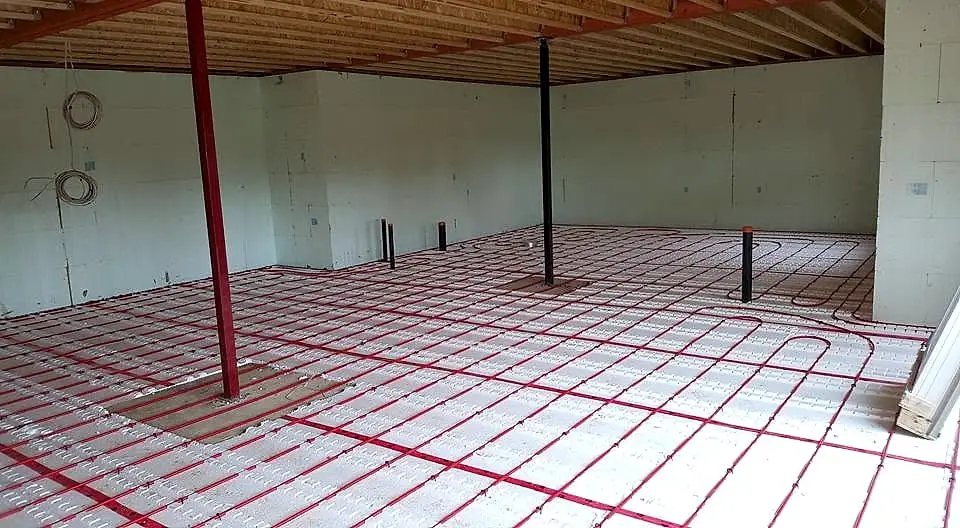
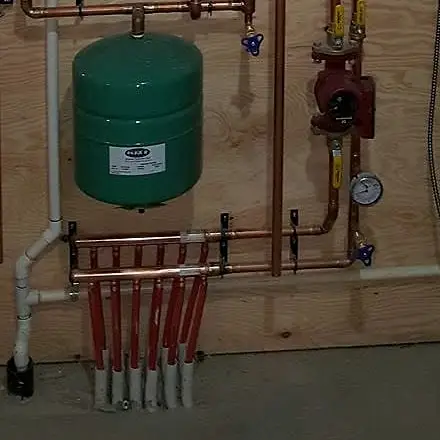
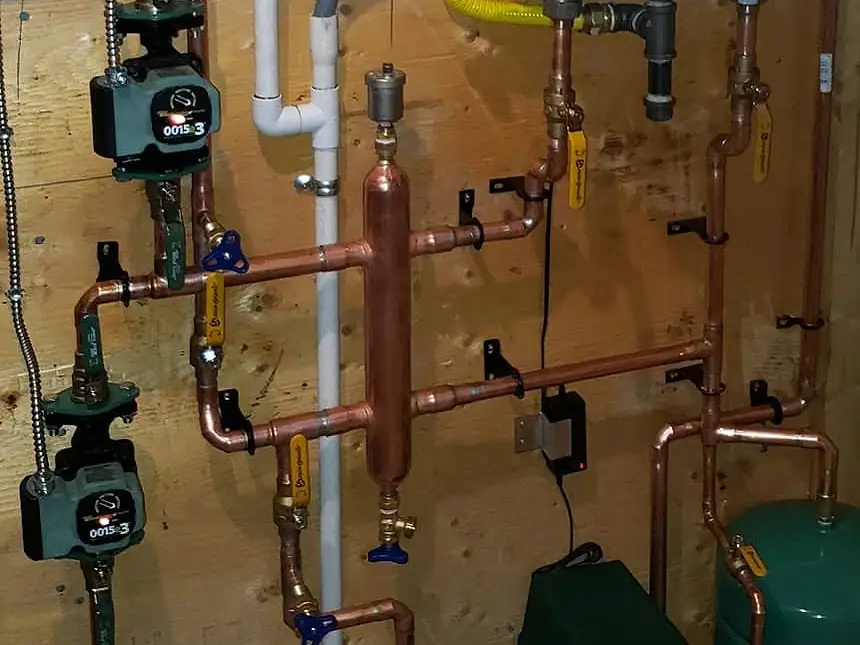
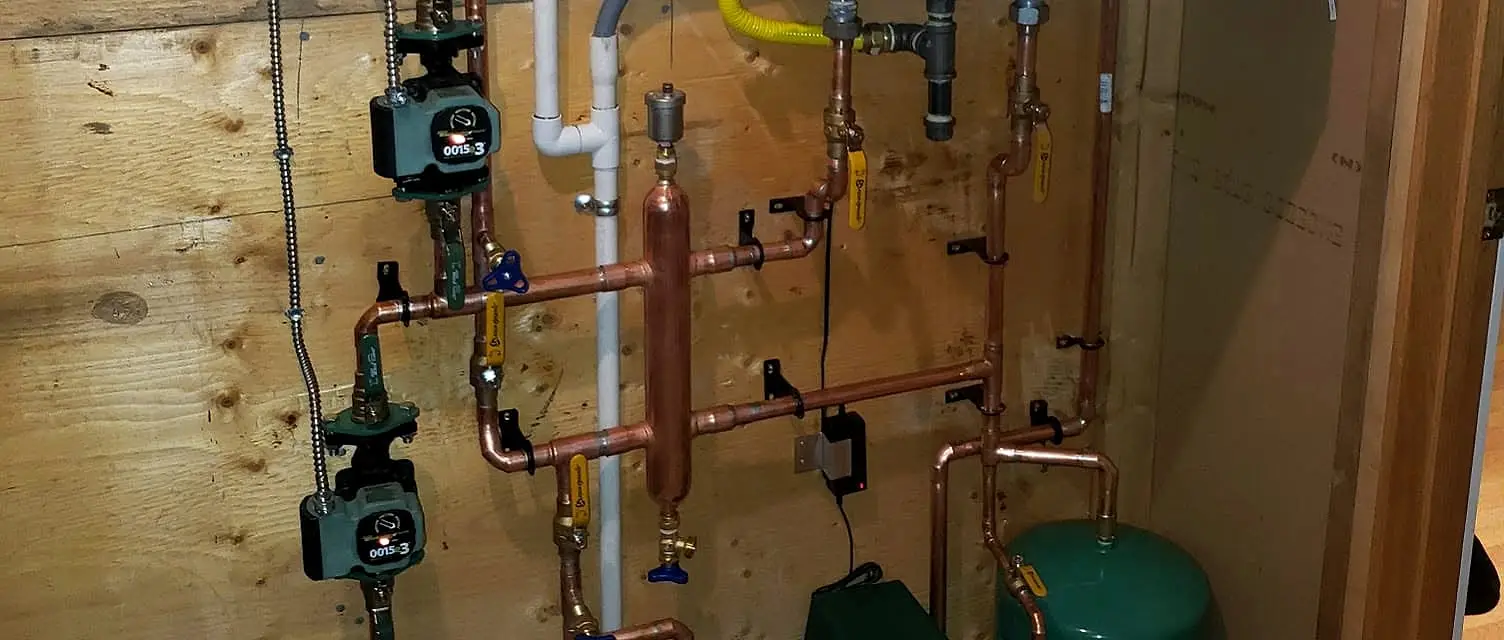
From DCJ jobs: in-floor heating loops connected to a copper manifold, and a wall-hung boiler piped to the loops.
See recent work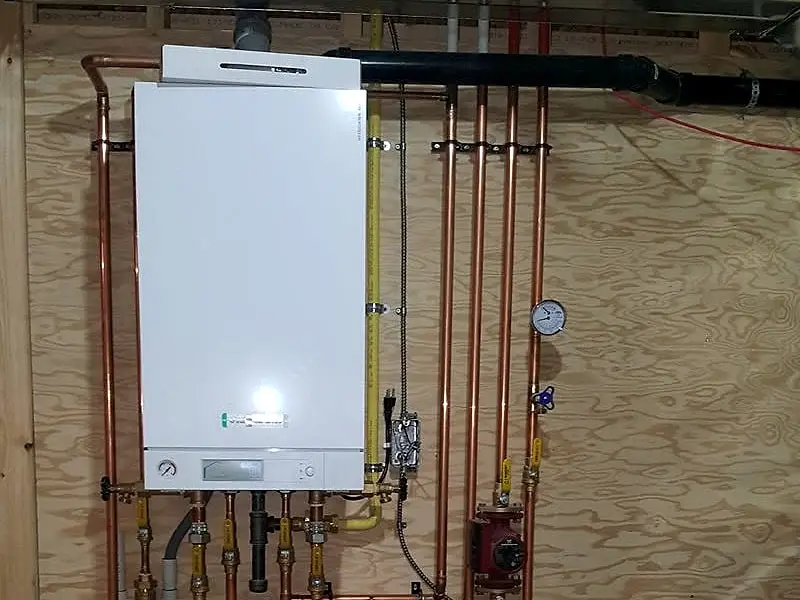
What to expect
How an in-floor system goes in
Every job is different. This is the usual order of things.
- Plan the layout. Rooms, zones, tubing spacing, and where the manifold and heat source will go.
- Lay the tubing. Fastened to insulation or mesh before a concrete pour, or installed with the subfloor.
- Pressure-test. The loops are tested under pressure before they’re covered, so leaks are found while they can still be fixed.
- Connect the manifold and heat source. Loops are piped to the manifold, and the manifold to the boiler or other heat source.
- Fill, purge and balance. Air is purged from the loops and flow is balanced so every zone heats evenly.
Why call DCJ
A local Whitecourt business
- Locally owned and operated Based in Whitecourt, Alberta.
- Close by Serving Whitecourt and the Barrhead area.
- Real work to show See photos from DCJ jobs in the recent work gallery.
FAQ
In-Floor Radiant Heating: common questions
How does in-floor heating work?
Warm water is pumped through loops of tubing in the floor. The floor warms up and gives off heat evenly across the room. The water is usually heated by a boiler, and a manifold splits the flow between loops and zones.
Can in-floor heating go into an existing home?
It’s easiest in new construction or when a floor is open for a renovation, especially before concrete is poured. Options exist for existing floors, but what’s practical depends on the house.
Is in-floor heating efficient?
Radiant systems run at lower water temperatures than many radiator systems, which pairs well with high-efficiency boilers. How efficient a system is depends on its design, insulation and heat source.
Why is one zone of my floor cold?
Usually a thermostat, a zone valve, a circulator pump or air in that loop. If every zone is cold, look at the boiler or heat source first.
Why does in-floor heat take so long to warm up?
A heated slab holds a lot of heat, so it responds slowly but stays steady. A big change from how it normally behaves is worth checking. Call 780-779-1481.
Related services
- Boiler Installation & RepairHot water boiler installation and repair for home heating.Learn more
- Gas Fitting & Gas Line InstallationGas lines run and connected for home appliances and heating equipment.Learn more
- Hot Water Tanks & Water HeatersHot water tank installation, replacement and repair.Learn more
Based in Whitecourt, serving Whitecourt and the Barrhead area.Service area · All services
Need help with in-floor heating in Whitecourt?
Call DCJ to talk it through, or send a quote request online.